
🐾 Part 3 of 4: When You Are Too Close to See Clearly The self doubt, the stoic pet, the good days that confuse you, and why your instinct matters
Love & Toe Beans | Pet Quality of Life | Brisbane Home Pet Euthanasia | Greater Brisbane Region
This is Part 3 of a 4 part series on understanding and assessing your pet's quality of life.
Part 1: What Quality of Life Really Means for Your Pet
Part 2:How to Assess Your Pet's Quality of Life
Part 3:When You Are Too Close to See Clearly
Part 4:Making the Decision with Love and Clarity
In Part 1 and Part 2 of this series, we explored what quality of life really means and how to begin assessing it. If you have not read those yet, we would gently suggest starting there.
This blog is different. It is less about information and more about the human experience of navigating this time. The doubt, the confusion, the hope, the grief, and the love that makes all of it so impossibly hard to see clearly.
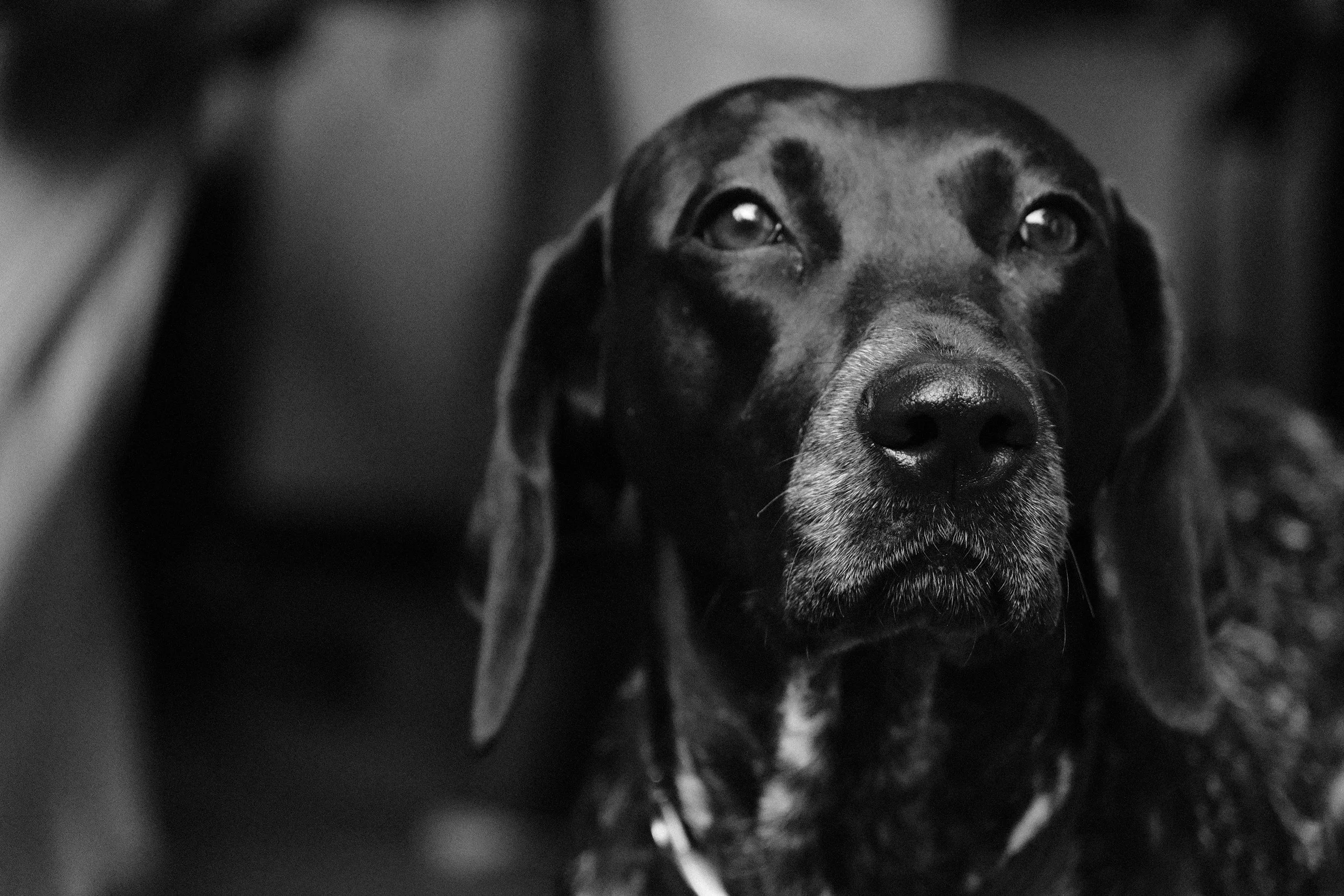
💔 When Love Makes It Hard to See
There is a particular kind of blindness that comes from loving someone deeply. It is not a failure of perception, but rather a function of love.
When you have shared your life with a pet for years, when they have been woven into your daily routines and your quiet moments and your hardest days, it becomes almost impossible to look at them objectively. You may be too close, too hopeful and too heartbroken at the prospect of losing them.
This is completely normal. It is also one of the most significant challenges in assessing your pet's quality of life honestly.
You may find yourself:
🌿 Interpreting a good afternoon as evidence that things are turning around
🌿 Holding onto a tail wag or a purr as proof that they are still okay
🌿 Minimising the hard moments and amplifying the good ones
🌿 Telling yourself that tomorrow might be better
🌿 Wondering if you are imagining things, or overreacting, or being dramatic
You are not imagining things and you are not overreacting. You are grieving someone you love while they are still here and that grief, that anticipatory heartbreak, colours everything you see.
🐾 The Stoic Pet
One of the most challenging aspects of assessing quality of life is the stoic pet. The dog who still greets you at the door despite being in significant pain. The cat who still purrs despite being deeply unwell. The pet whose love for you is so strong that they keep showing up for you even when it hurts.
Stoic pets are not rare and in fact, most pets have some degree of stoicism built into them. It is instinctive, a survival mechanism that has been hardwired into animals for thousands of years. Showing weakness is dangerous in the wild, so they learn to mask it and they do it so well that the people who love them most can be the last to see how much they are carrying.
This is not something to feel guilty about, just something to understand.
A pet who is still greeting you, still accepting affection, still eating, may be doing all of those things not because they are truly comfortable, but because their love for you and their instinct to keep going is stronger than their ability to show you how they feel.
For a deeper exploration of stoic pets and what their behaviour can and cannot tell you, please see our blog ""When Their Eyes Still Light Up".
🌤️ The Good Days That Confuse You
Good days are both a gift and a complication.
A good day, a day when your pet seems brighter, eats well, responds to you, has a moment of genuine joy, can feel like proof that things are not as bad as you feared. It can reset your worry and give you hope that the difficult days were an anomaly rather than a trend.
And sometimes that is true. Some pets do have genuine rallies, periods of improvement that are real and meaningful.
But sometimes a good day is simply a good day within an overall picture of decline. It does not change the trend and it does not mean the difficult days were a mistake to worry about. It is just the natural variation of a body that is struggling.
The challenge is knowing which kind of good day you are looking at and when you are too close, when hope and love and grief are all tangled together, it is genuinely hard to tell.
This is one of the reasons we encourage keeping a quality of life journal over time, as we discussed in Part 2. A single good day looks very different when it sits within a week of difficult ones than when it sits within a week of mostly okay ones. The journal helps you see the pattern rather than just the moment.
🌀 The Self Doubt
Almost every family we walk alongside through this time experiences significant self doubt and it is one of the most universal and most painful parts of the whole experience.
Am I doing this too soon? Have I waited too long? Should I try one more treatment? Am I giving up on them? Would they want this? What if tomorrow is better? What if I get it wrong?
These thoughts are not a sign that you are making the wrong decision. They are a sign that you love your pet deeply and that you are taking this responsibility seriously.
The truth is that there is rarely a moment of perfect clarity. There is rarely a day when every sign lines up and the decision feels obvious and certain. Most people make this decision in the grey, in the in-between, in the space of not quite knowing but sensing, deeply and honestly, that the time has come or is coming.
And that sensing, that quiet knowing that sits beneath all the doubt and the hope and the fear, deserves to be trusted.
🧠 The Complexity of Getting an Outside Perspective
When you are too close to see clearly, an outside perspective can help. A trusted vet, a friend who knows your pet, or a quality of life consultation with someone experienced in end of life care.
Outside perspectives can also come with their own complications.
Well-meaning people may say things that do not land right for your situation. "You will know when it is time." "They will tell you." "Keep fighting." "You do not want to do it too soon." These phrases, however kindly meant, can add to the confusion rather than cut through it.
The most helpful outside perspective is one that takes the time to understand your pet as an individual, that considers the whole picture rather than a single data point, and that holds space for the complexity and the grief without rushing you toward a particular answer.
This is exactly what a Quality of Life consultation is designed to offer. Phone consultations are available at no cost. In-home consultations are available across the Greater Brisbane Region for $198.
💛 Your Instinct Matters
Amidst all the information, all the scales, all the journals, all the outside opinions, there is something that matters just as much and that is your instinct.
You have known your pet for years. You have watched them every day, you know the difference between their good face and their not-so-good face. You know what their version of happy looks like, and you know when that version is becoming harder to find.
That knowledge is important.
Research on pet euthanasia consistently shows that pet parents who felt they made the decision at the right time, or even slightly early, carry far less grief and guilt than those who feel they waited too long. The worry of too soon is almost always more powerful than the reality of too soon.
This does not mean rushing, but it does mean trusting yourself enough to act on what you are sensing, even when you cannot prove it with a chart or a number.
🫶 Grief Before Goodbye
Something that is rarely talked about but almost universally experienced is the grief that begins before the loss.
If your pet has been unwell for some time, you may have been grieving for weeks or months already. Grieving the version of them you knew before the illness, grieving the routines that have changed and grieving the future you imagined together.
This anticipatory grief is real and valid and exhausting. It can make everything harder to see clearly, and it can make the decision feel even heavier than it already is.
Please be gentle with yourself in this. You are not grieving prematurely, you are simply loving someone who is leaving, and feeling that leaving before it happens.
For a deeper exploration of anticipatory grief and all the emotions that can come with this time, please see our pet grief resources.
🌈 When the Doubt and the Knowing Sit Together
Here is what we have observed, walking alongside families through this experience every day.
Most people who are asking the question "Is it time?" , already sense the answer. The doubt and the knowing often sit together, the knowing quietly present beneath all the noise of the doubt and the hope and the fear.
You are allowed to not be ready, you are allowed to need more time and you are allowed to sit in the uncertainty for a while.
You are also allowed to trust what you are sensing, to act on love even without certainty and to choose peace for your pet even when the grief of that choice feels unbearable.
Continue to Part 4: Making the Decision with Love and Clarity

🧡 We Are Here
If you are in this place right now, please know you are not alone. We are here to talk it through, without pressure, without judgement, and with all the care we have.
📞 1800 823 267 🌐 www.loveandtoebeans.com.au
📚 For more resources on pet quality of life, please visit our resources page.
📋 For our downloadable Quality of Life Tracker, click here.
Previous in the series:
Part 1: What Quality of Life Really Means for Your Pet
Part 2:How to Assess Your Pet's Quality of Life
Next in the series:
Part 4:Making the Decision with Love and Clarity
Related reading:
"When Their Eyes Still Light Up"
"But They're Still Eating and Wagging Their Tail"
"But My Cat Is Still Eating and Purring"
"When Doing Everything Isn't Always the Kindest Choice"
🐾 With love,
Love & Toe Beans
Love & Toe Beans provides Quality of Life consultations, gentle in-home pet euthanasia, pet cremation, and grief support across the Greater Brisbane Region including Brisbane, Logan, Redland Bay, Ipswich and Moreton Bay.